
These questions are increasingly defining conversations around the forthcoming general elections.
Beyond party manifestos, campaign promises and political declarations, the battle may ultimately revolve around economic hardship, insecurity, unemployment, public confidence in government, political defections and the strength of grassroots mobilisation.
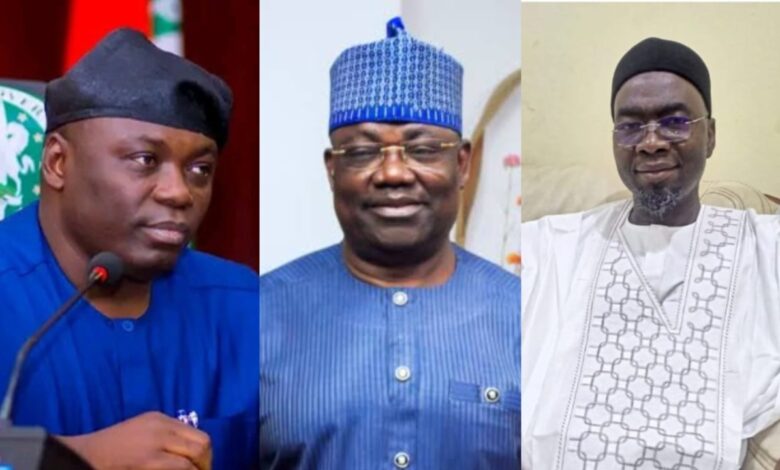
While the Independent National Electoral Commission, INEC, has listed 19 governorship candidates, making the contest one of the most crowded political battles in the state’s recent history, DAILY POST observed that prominent contenders include incumbent Governor Agbu Kefas of the APC, former Senator Emmanuel Bwacha of the PDP and former Senator Abubakar Umar Tutare of the ADC.
The political drama is particularly interesting because of the reversal of political platforms between Kefas and Bwacha.
Kefas, who won the 2023 governorship election under the PDP, has since defected to the APC, while Bwacha, who contested the same election under the APC, is now the PDP governorship flag bearer.
This political development has not only altered traditional calculations but also introduced a new dimension to the contest.
The question confronting political observers is whether the movement of influential politicians between parties will automatically translate into a corresponding movement of voters.
“The governor’s political calculations will largely revolve around his administration’s performance, party structures, grassroots mobilisation and ability to sustain the political alliances that have emerged following his defection,” an APC chieftain, Ismaila Abba, said.
“His administration’s free education policy, particularly at the primary and secondary school levels, alongside other development initiatives, is expected to feature prominently in the campaign,” Abba stated.
Voters, according to political analysts, will have the opportunity to examine the administration’s performance in infrastructure, healthcare, education, employment, security, agriculture and economic development.
The governor will therefore face an important question: Can the political advantage of incumbency translate into broad-based electoral support across Taraba North, Taraba Central and Taraba South?
For the APC, the task goes beyond celebrating the governor’s defection. The party must demonstrate that its expanded political structure can command genuine grassroots support.
Governor Kefas and APC stakeholders in the state, however, remain optimistic that the party will not only emerge victorious in the governorship election but also secure victories for President Bola Ahmed Tinubu and its candidates contesting National Assembly and State House of Assembly seats in 2027.
“The people have no doubt, and they’ve given all the assurance that Mr President is reaching out to them through me, and for that reason, they are going to vote for Mr President. Taraba State is for APC 100 percent,” Kefas said.
“In Taraba State, we are not contesting elections with any party, anybody. We only have candidates from other parties participating in elections with us,” the governor added.
Bwacha’s governorship ambition
For former Senator Emmanuel Bwacha, the 2027 election represents another opportunity to pursue his governorship ambition.
His emergence as the PDP candidate places him at the centre of the opposition’s efforts to challenge the APC administration.
Bwacha brings legislative experience, political networks and previous electoral experience to the contest, having represented Taraba South in the National Assembly.
However, the PDP faces the challenge of rebuilding its structures following the departure of its former governor and other influential political figures.
The party must demonstrate that it can survive the political realignment and maintain a credible support base across the state.
“The PDP faces the challenge of rebuilding its structures following the departure of its former governor and other influential political figures. The party must demonstrate that it can survive the political realignment and maintain a credible support base across the state,” Ande Kelvin argued.
Bwacha’s challenge will be to convince voters that his candidacy represents a viable alternative and that the PDP can offer a different approach to governance.
The central question is whether the former senator can consolidate his established political networks and attract support beyond his immediate political constituency.
“The stage is now set for the 2027 political contest. The mistakes witnessed during the 2023 general election will not be repeated,” Bwacha said.
Citing alleged economic hardship and high levels of corruption under the incumbent administration, Bwacha expressed confidence that the PDP has the capacity to form the next government in the state in 2027.
“Today, governance has drifted away from the people. Public service has been replaced with self-serving interests. Our vision is simple: to restore Taraba to a place where every citizen feels a sense of belonging. A state where leadership serves the people, and the people trust their leaders,” he boasted.
Tutare and the ADC factor
Another political figure whose participation has added to the unfolding drama is former Senator Abubakar Umar Tutare, the ADC governorship candidate.
Tutare’s candidacy presents another platform for voters seeking alternatives to the APC and PDP.
His previous experience in the Senate and political connections could provide opportunities to engage different constituencies across the state.
However, the ADC’s major task will be translating political visibility into a sustainable grassroots structure across Taraba’s 16 local government areas.
The party must demonstrate that it has the organisational capacity to compete beyond the influence of prominent individuals.
“Let me tell you for free that the ADC is the party to beat come 2027. Tarabans are tired of this failed administration in the state and the country at large. They want a strong alternative, and that is what we offer,” Tutare said.
16 other candidates in the race
Although the APC, PDP and ADC have attracted considerable attention, the contest is not limited to these three parties.
Professor Jerome Nyameh of the Accord Party, Danjuma Usman Shiddi of APGA and Yahaya Mohammed Sani of the Nigeria Democratic Congress are among the other candidates seeking the governorship.
The participation of 19 candidates creates a wider political field and introduces the possibility of a fragmented electoral contest.
For smaller political parties, the election provides an opportunity to present alternative programmes, mobilise dissatisfied voters and challenge the dominance of established political structures.
However, their ability to translate political ambitions into significant electoral support will depend on organisation, resources, visibility and grassroots acceptance.
The 2027 election could therefore test whether Taraba voters remain largely aligned with established political parties or are increasingly willing to explore alternative platforms.
Ultimately, the contest will be a test of political loyalty, the strength of party structures, the appeal of individual candidates and, perhaps most importantly, the extent to which voters believe their lives have improved under successive administrations.