Uncategorized
Wildlife Trafficking: Nigeria will crush 2.5 tons of elephant trunk use powder to construct monument – Salako


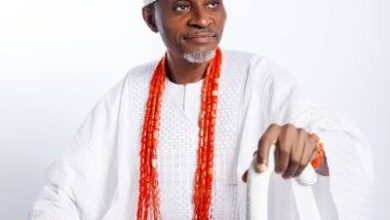
Nigeria’s Minister of State for Environment, Dr. Iziaq Kunle Salako, addressing the 9th Conference of Environment Ministers in Islamic World, in Jeddah, Saudi Arabia, on Thursday
Damilola Ajibola
The Minister of State for Environment, Dr. Iziaq Kunle Salako, has disclosed that about 2.5 tons of elephant trunk would be crushed, converted to powder and eventually used to construct monument, as a way of discouraging wildlife trafficking
He said the development would serve as a message to wildlife traffickers that the country is ready to protect its rich biodiversity and unique ecosystem.
Salako stated this in his remarks at the 9th Conference of Environment Ministers in the Islamic World with the theme “Towards Green Transformation In The Islamic World”, held at Jeddah, Kingdom of Saudi Arabia, on Thursday.
He noted that the country had put in national strategy from 2022 -2026 to combat wildlife and forest crime.
The Minister said “Just before I travelled for this conference, one of the last assignments that I undertook is the supervision of the incineration of about 4 tons of seized wildlife items including pangolin scales, leopard, python and crocodile skins.
“In the coming days, we shall be crushing about 2.5 tons of elephant trunk and use the powder to construct a monument as a strong message to wildlife traffickers that Nigeria will protects its rich biodiversity and unique ecosystem.”
Salako told the Conference that
Nigeria is severely affected by the effects of deleterious changes in the environment vis a vis sea level rise along our coastline; progressive desertification and loss of fertile land; deforestation; disruptive erosion and land degradation; flooding and general environmental degradation from pollution and contamination.
While noting that the country is one of the most disaster-prone countries in Africa, being extremely vulnerable to droughts, floods, gully erosion, and wind storms.
“If no actions are taken towards Disaster Risk Reduction (DRR), it is predicted that by 2030 Nigeria will be one of the ten countries globally most at risk of disaster-induced poverty,” he added.
He also acknowledged the fact that religion played important role in the conservation of the environment and in Islamic ethos, environmental protection is a divine duty of all Muslims.
Salako added, “As Muslims, we are trustees of Almighty Allah on earth with ethical duties of stewardship (Khilafa), responsibility (Amanah), balance (Mizan) and Justice (Adl). Our gathering here is therefore in furtherance of the fulfillment of our roles as stewards/vicegerents of the earth responsible for caring for the environment and mitigating negative consequences of some of our activities.
“As we all know, the environment sustains human activities and all our socio-economic enterprises depend on resources from the environment.
“It is therefore essential that the management and conservation of these resources be done in such a way that they can continue to support human lives and endeavors.
“The planetary triple crisis of climate change, biodiversity loss and pollution is a global phenomenon.”